
16 July 2026 · The Sonam Pickles family
A year of fruit and vegetables in Dobhi, Kullu — and the pickles they become
Season by season, what grows around our kitchen in Dobhi (Kullu, Himachal Pradesh) — from March lingri to November persimmon — and what our family pickles from each harvest.
Our kitchen sits in Dobhi, a village in the Kullu valley of Himachal Pradesh. We don’t really decide what to make here — the valley decides. Whatever the orchards and fields around us are giving in a given month is what ends up on our cutting boards, in our mustard oil, and eventually in your jar.
So here is the honest calendar of our kitchen: what’s fresh in Dobhi through the year, and what we turn into pickles, chutneys and preserves as each harvest arrives.
March — the valley opens with lingri (लिंगड़ी)
Before the fruit season begins, the forests send up lingri — fiddlehead fern, gathered young and tender in early spring. Himachalis have pickled it forever; लिंगड़ी का अचार is one of the valley’s oldest delicacies, and the season is short and entirely wild. If you ever see a jar of it, don’t wait — there is no second batch until next March.
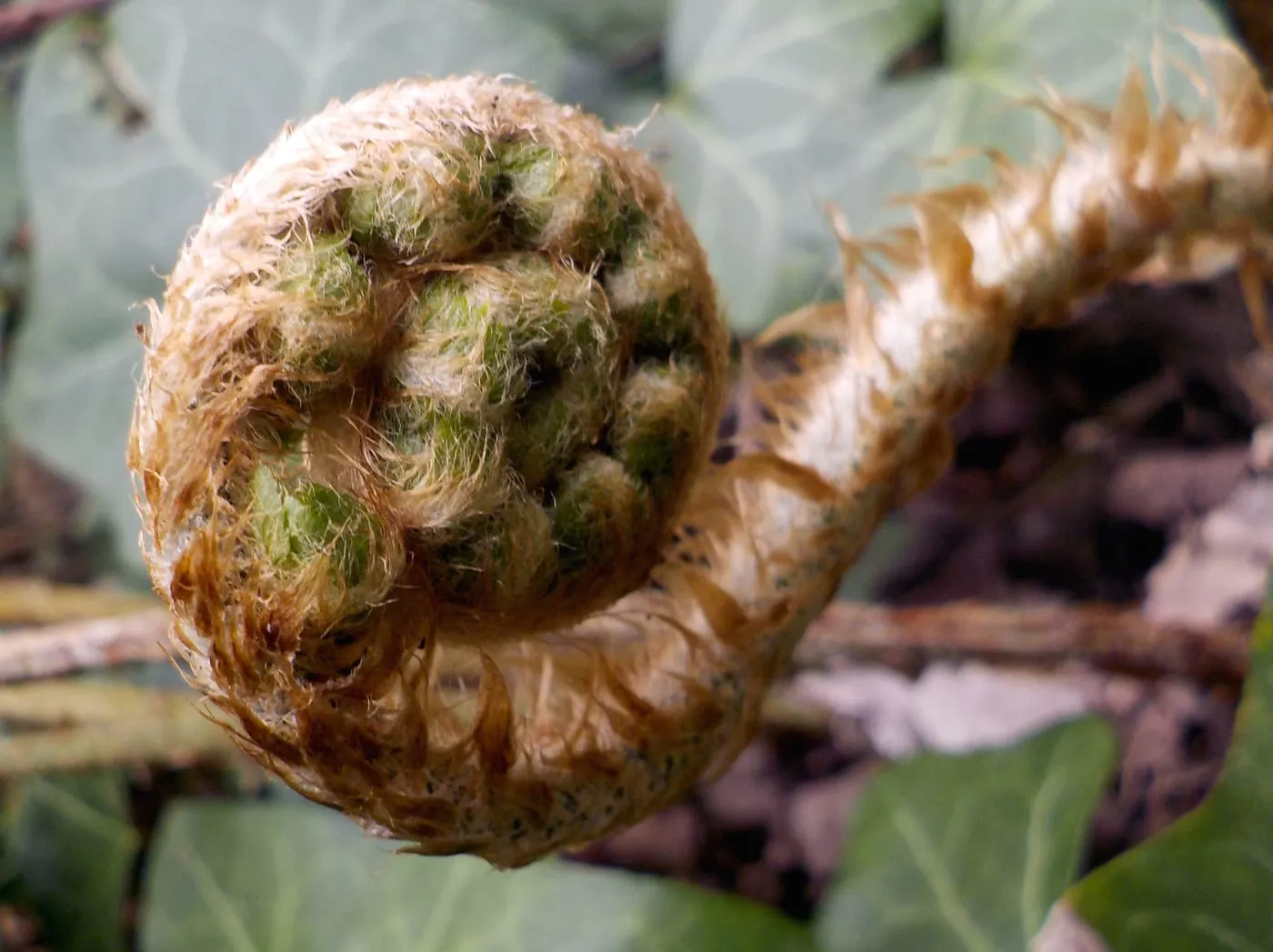
The fiddlehead’s famous spiral. Photo: Albarubescens, CC BY 4.0, via Wikimedia Commons — until we photograph our own lingri next March.
Fresh fruit in Dobhi, April to November
| Month | What’s fresh · उपलब्ध फल |
|---|---|
| April (अप्रैल) | Strawberry (स्ट्रॉबेरी), low-chilling plum (प्लम), loquat (लोकाट) in some pockets |
| May (मई) | Cherry (चेरी), apricot (खुबानी), strawberry |
| June (जून) | Cherry, apricot, peach (आड़ू), plum — and garlic (लहसुन), our hero harvest |
| July (जुलाई) | Peach, plum, pear (नाशपाती), the first early apples (सेब) |
| August (अगस्त) | Apple, pear, plum, peach |
| September (सितंबर) | Apple — the main season, pear, pomegranate (अनार) |
| October (अक्टूबर) | Apple, persimmon (जापानी फल), pomegranate |
| November (नवंबर) | Persimmon, kiwi (कीवी), fresh walnut (अखरोट), a few late-ripening apples |
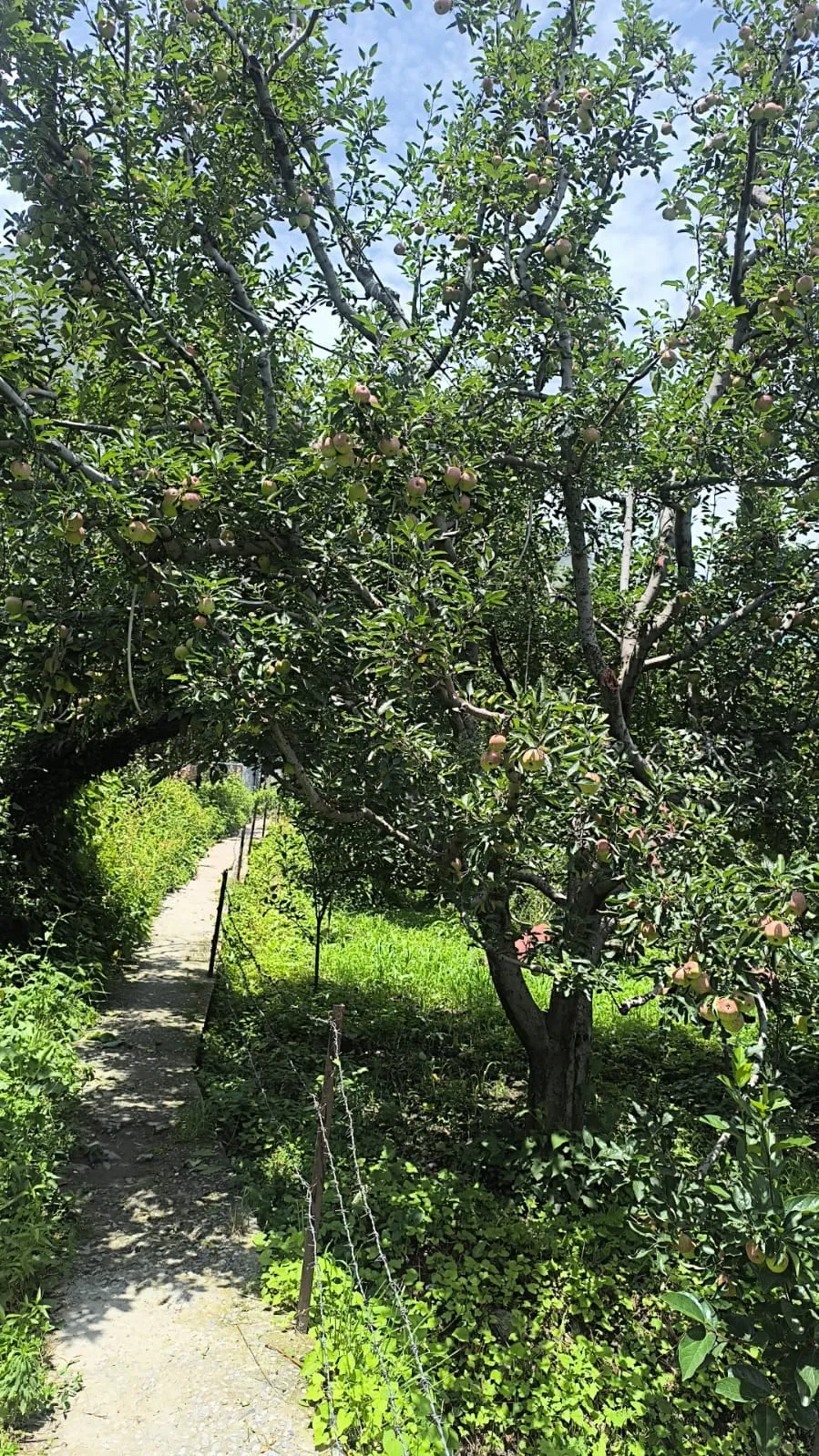
The orchard path a few steps from our kitchen — ducking under apple branches is part of the commute.
The Kullu district’s great orchard crops — apple, plum, peach, apricot, pear, pomegranate, kiwi and persimmon — all grow within a short drive of our kitchen. From May to October there is never a month without some fruit coming off the trees around Dobhi.
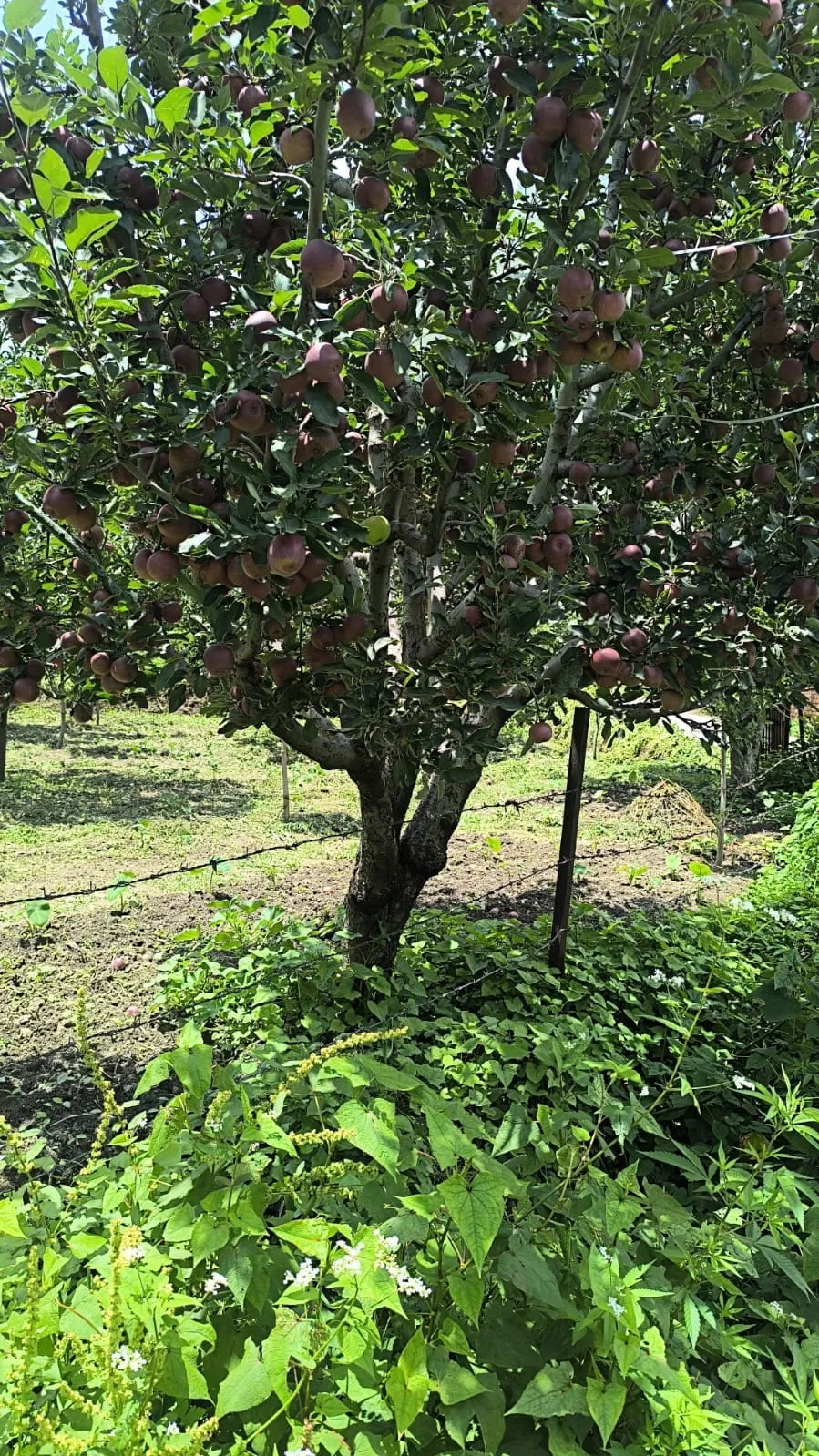
One of the trees by the house, carrying more than its branches would like.
Vegetables, season by season
Kullu is famous for its off-season vegetables — the altitude lets the valley grow things when the plains cannot. Around Dobhi, the fields rotate roughly like this:
| Months | What’s growing · उपलब्ध सब्जियां |
|---|---|
| January – March | Peas (मटर), cabbage (पत्तागोभी), cauliflower (फूलगोभी), radish (मूली), turnip (शलगम), spinach (पालक), fenugreek (मेथी), fresh coriander (हरा धनिया) |
| April – June | Peas, French beans, tomato, capsicum (शिमला मिर्च), cucumber (खीरा), bottle gourd (लौकी), ridge gourd (तोरी), bitter gourd (करेला), green chilli (हरी मिर्च) |
| July – September | Tomato — the main crop, French beans, capsicum, cucumber, cabbage, cauliflower, broccoli, ginger (अदरक), green chilli |
| October – December | Cabbage, cauliflower, peas, radish, turnip, spinach, fenugreek, garlic (लहसुन), onion (प्याज) |
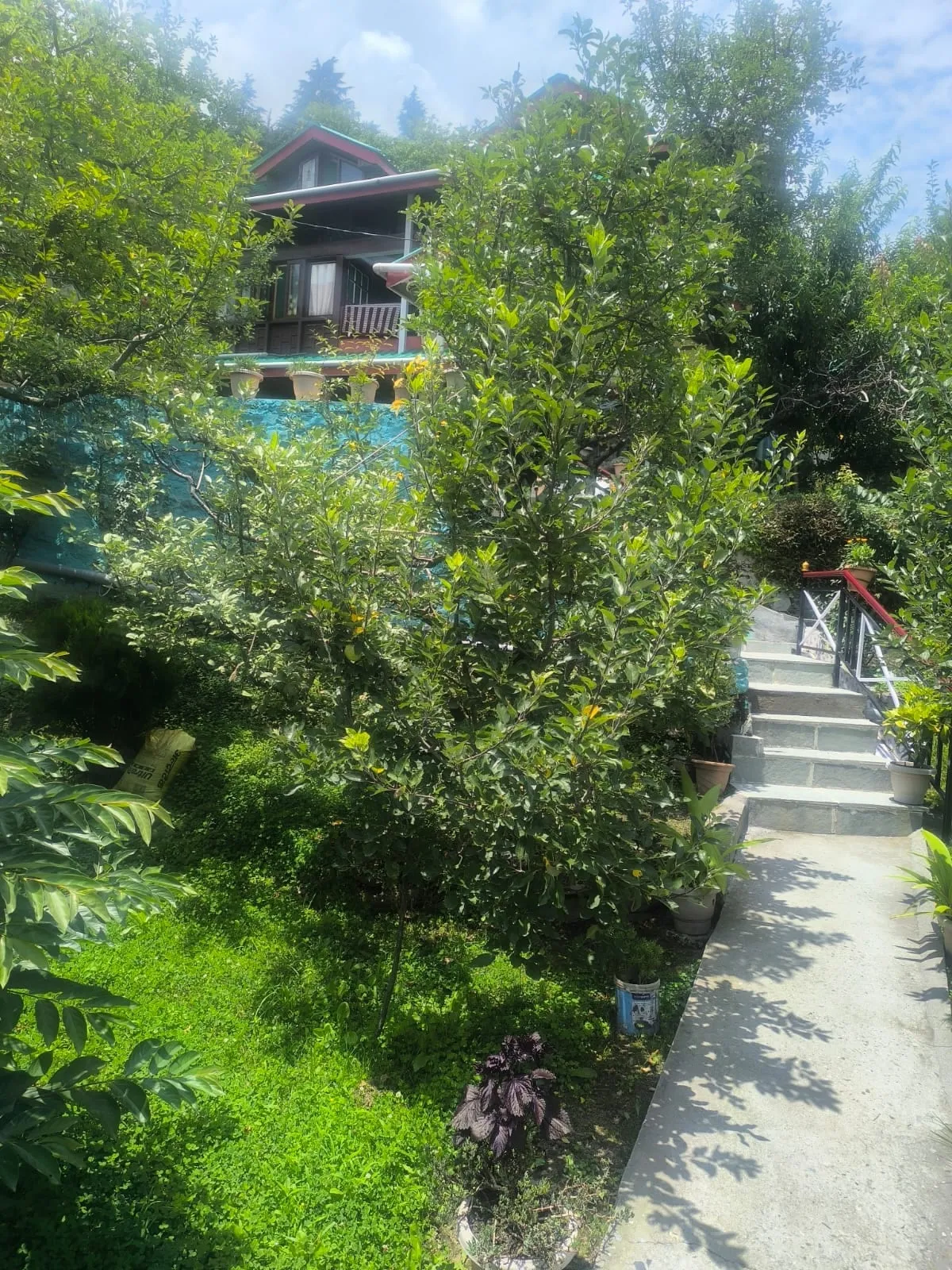
The path through the kitchen garden — the distance from soil to jar is a few dozen steps.

What this means for your jar
We make pickle from what the valley hands us, in the order it hands it to us.
Garlic comes first — it is the jar we built this kitchen around — and apple and peach now sit beside it on the shelf. Around them, as the seasons turn, expect small batches of the valley’s other gifts: lingri in spring, green chilli, mixed vegetable and ginger through the summer and monsoon, and plum and apricot turned into sweet-sour pickles and chutneys as the orchards come in. Radish, turnip and cauliflower carry the winter jars.
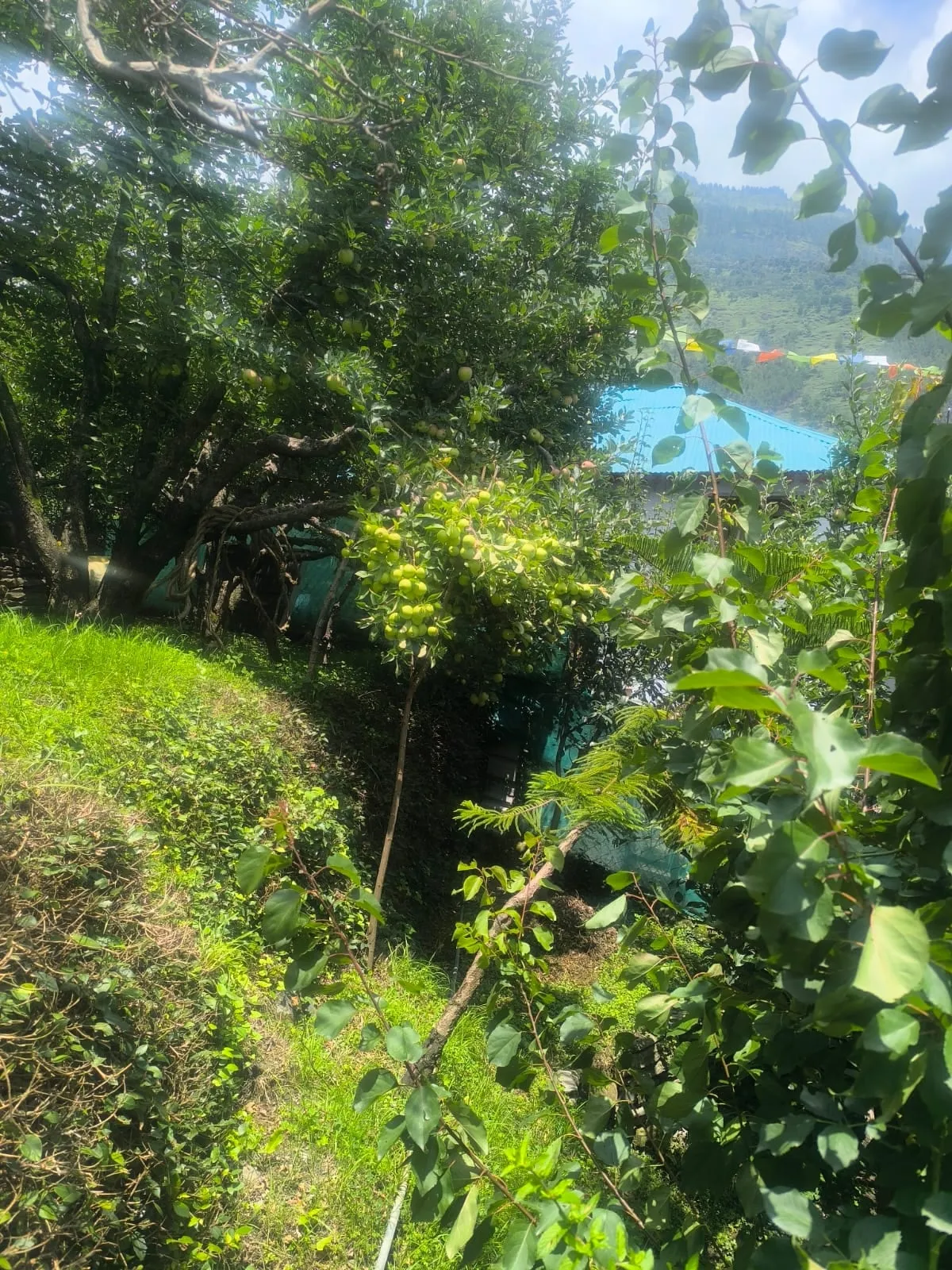
Green apples over the garden, prayer flags on the ridge — the view the pickles grow up with.
Two honest notes about how this works:
- The shelf follows the seasons, not a catalogue. A fruit that ends in September is not in our kitchen in October. When a batch is gone, it’s gone until the valley grows it again.
- Small batches mean small numbers. We would rather run out than make it any other way.
If you want to know what’s being made this month, just ask us on WhatsApp — someone from the family will answer, usually from the kitchen itself.